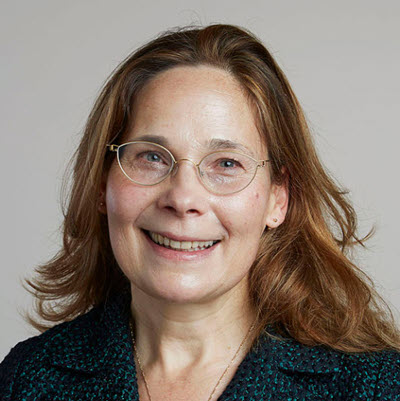
Our students have chosen Abigail Chapman to be our newest Zbarsky recipient.
The SH Zbarsky Scholarship is awarded to an outstanding PhD student in the Department of Biochemistry and Molecular Biology. The scholarship has been endowed by the friends and colleagues of Dr. SH Zbarsky in recognition of his outstanding contributions to Biochemistry and UBC. Dr. Zbarsky was one of the original two members of the UBC Department of Biochemistry, when it was established in 1950. Each year, the Zbarsky Scholarship is given to a 3rd year Biochemistry PhD grad, who presented the best BIOC 530 seminar. The successful candidate is voted by their peers. For 2021W the Zbarsky Award has increased to $3,200.
“Title: Biochemical and Structural Characterization of the Elongator, TINTIN and PI3K Gamma Complexes”
Abstract: In eukaryotes, protein complexes are often composed of catalytic enzymes along with non-catalytic subunits that can modulate the stability, interaction patterns, and activities of the catalytic subunits. In this thesis, three such complexes are biochemically and structurally characterized to uncover how their activities are regulated: the the tRNA modifying Elongator complex, the transcription associated TINTIN complex, and the lipid kinase PI3Kg complex.
Conserved from yeast to humans and composed of six subunits (Elp1 – Elp6), Elongator catalyzes the modification of the anticodon loop of transfer RNAs (tRNAs) and in turn regulates messenger RNA (mRNA) decoding efficiency. How the different human Elongator subunits coordinate with one another to catalyze tRNA modification are not fully understood. By examining human Elongator and its subunits by single-particle electron microscopy (EM), co-purification and pulldown assays, and substrate binding assays, we found that the complex shares similar overall morphologies as the yeast counterparts, and the accessory proteins serve to stabilize ELP3 and improve the binding of substrate tRNAs.
The heterotrimeric TINTIN complex is an important regulator of transcriptional elongation. Composed of the Eaf3, Eaf5, and Eaf7 proteins, TINTIN exists as both as a module within the NuA4 histone acetyltransferase complex as well as independently. TINTIN is targeted to chromatin through Eaf3, a chromodomain-containing protein that is shared with the Rpd3S histone deacetylase complex. A combination of co-immunoprecipitation and hydrogen deuterium exchange mass spectrometry (HDX-MS) revealed that upon binding Eaf5 and Eaf7, Eaf3 undergoes conformational changes which improves the affinity of Eaf3 towards nucleosomes trimethylated at Lys 36 of histone H3 (H3K36me3). Negative stain single-particle electron microscopy (EM) analysis of TINTIN in complex with nucleosomes revealed that TINTIN binds to the disc edge of nucleosomes with increased specificity in the presence of H3K36me3. Together, this work provides molecular insights into the dynamics of TINTIN and the mechanism by which its interactions with chromatin are regulated.
The class IB phosphoinositide 3-kinase (PI3K), PI3Kγ, is a master regulator of immune cell function and a promising drug target for both cancer and inflammatory diseases. Critical to PI3Kγ function is the association of the p110γ catalytic subunit to either a p101 or p84 regulatory subunit, which mediates activation by G protein–coupled receptors. The cryo–electron microscopy structure of p110γ-p101 reveals the novel architecture of the p101 regulatory subunit and demonstrates a unique assembly that is distinct from other class I PI3K complexes.
Monday, November 22, 2021 at 2:30 pm at LSC #3 and or join by Zoom.
A honey bee queen is the sole egg-layer in a colony, and colony fitness depends on her health and productivity. Worryingly, beekeeper surveys show that “poor queen quality” is one of the most frequently reported causes of colony death, but little is known about the underlying cause of declining quality. I research biotic and abiotic factors affecting queen fertility, with a focus on temperature stress, which has become even more relevant in the wake of the heatwave last June. In this talk, I’ll describe how queens are vulnerable to temperature stress, practical methods of mitigating risk, and implications this stress response has on queens’ ability to combat infectious disease.
About Michael John Page Postdoctoral Fellow Award
The Michael John Page Postdoctoral Fellow Award recognizes a Postdoctoral Fellow who reflects Dr. Page’s academic excellence and his passion for life.
Dr. Michael John Page
Michael John Page was born and raised in Thunder Bay, Ontario where he graduated from the Port Arthur Collegiate in 1994. Mike then attended Carleton University in Ottawa graduating with his B.Sc. degree in biochemistry in 1998. Mike entered the UBC Biochemistry & Molecular Biology graduate program under Ross MacGillivray’s supervision and supported by competitive graduate studentships from Canadian Blood Services. During his time in the MacGillivray lab, Mike designed, created and hosted the first web site for the UBC Centre for Blood Research. Mike successfully defended his Ph.D. thesis entitled Bioengineering coagulation factor Xa substrate specificity into Streptomyces griseus trypsin in 2004. During his graduate studies, his fellow graduate students recognized Mike’s achievements by selecting him for the 2001 Zbarsky Prize. Dr. Page then completed a highly productive postdoctoral fellowship studying the biological activity of thrombin with Dr. Enrico Di Cera at Washington University in St. Louis. In 2010, Mike moved to a junior faculty position at the University of California, San Francisco supported by a grant from the American Heart Association and mentored by Dr. Charles Craik. At UCSF, Michael developed a peptide-based probe that was able to detect blood clots in real time. He and his team won a major biochemical entrepreneurship competition that also stimulated him to patent his discovery and to form a spin-off company called Biopaint Inc. Tragically, Mike collapsed and died suddenly in June 2013 at age 36. In addition to Mike’s sustained academic success, he was well-liked by his peers and friends. As one colleague describes him:
Mike was the essential glue in keeping our group coherent during grad school and made those years so memorable for all of us.
After his arrival in Vancouver in 1998, Mike hosted the annual biochemistry hockey tournament in Vancouver and whether in Vancouver, St. Louis or San Francisco, he continued to host the tournament and to maintain his support for his beloved Vancouver Canucks hockey team. Mike was always there to help and support his colleagues. Mike was a great guy who was fun to be around – he really had a passion for life. As one of his graduate student colleagues recalls:
Mike had an endless excitement and drive for science, sports and life in general and he shared all of those interests with his friends
UBC Faculty Association: This association promotes the interests of UBC faculty, upholds UBC faculty's academic freedom, and supports an environment that is free from discrimination and harassment.
Strategic Plan: UBC's collective vision, purpose, goals and strategies for the years ahead including initiatives like Focus on People.
Respectful Environment: Guiding principles that support an environment of respect, civility, diversity, opportunity and inclusion at UBC.
Sustainability: Information on sustainability programs and activities including Sustainability Action Plans, policies, regional and international engagement, campus tours, courses, fellowships, programs, research collections, student groups, and ways to get involved.
Resources from UBC’s Human Resources and Planning departments as well as federal, provincial, and local governments.
Get to know Canada (Government of Canada): The Government of Canada's guide to the land, people, government, laws, human rights, and provinces and territories of Canada.
Faculty housing programs: Information on the Housing Action Plan (HAP) to help improve affordability and choice for faculty, staff and students based on our Vancouver campus.
Finding housing: Information on buying a home in BC, UBC's Faculty Home Ownership Program, UBC's Housing Action Plan, housing programs and taxable benefits, and rental housing.
Relocating to Vancouver: Information on housing, child care, schooling, health care, doctors, hospitals, health and wellbeing, transportation, driving, Social Insurance Number (SIN), and taxation.
Importing a vehicle into BC (ICBC): Information for drivers and car owners moving to BC. Please note that drivers have 90 days to switch over to a BC driver’s license.
Home, property, and development (City of Vancouver): Information on waste and recycling, taxes, utility and landfill bills, building and renovating, urban planning, animals, trees, gardens, lawns, property use, noise, graffiti, water/sewer/energy use, and public safety.
Work Permit
Foreign Faculty members are required to apply to Immigration, Refugees and Citizenship Canada (IRCC) for a Work Permit in Canada. The Immigration Process for Foreign faculty on the Faculty Relations website outlines the steps involved in obtaining a temporary work permit and Social Insurance Number (SIN). It also provides information on what is expected after the foreign faculty arrive at UBC.
Employer support letter explaining the urgent and essential nature of the job in Canada: Our HR Manager, Mark Mendoza will contact you to create this letter.
Foreign faculty members should receive their work permit at the port of entry. Please submit a copy of your work permit to our HR Manager, Mark Mendoza immediately so he can process your appointment.
Social Insurance Number (SIN)
The Social Insurance Number (SIN) is a nine-digit number that you need to work in Canada or to have access to government programs and benefits. All employees are required by Service Canada to present their SIN card to their employer within three days of starting work.
For more information about obtaining a Social Insurance Number, visit the Service Canada website.
Health Care
B.C's Medical Services Plan is mandatory for all B.C. residents.
*New (and returning) residents are required to complete a wait period consisting of the balance of the month in which residence in British Columbia is established, plus two months before benefits can begin. Please find more details: Coverage Wait Period
While at UBC, any earnings received are considered Canadian income, unless otherwise indicated by Canada Revenue Agency (CRA) in writing prior to arrival.
You can also access the CRA website for a self-directed online course on understanding taxes, which includes help on how to file a tax return.
If you have any questions about paying income tax in Canada, please refer to CRA’s information for non-residents or contact the International Tax Services Office (collect calls are accepted):
Calling from Canada and the U.S.: 1 800 267 5177
Calling from outside Canada and the US: 1 613 952 3741
There are a number of banking institutions and branches for you to choose from in British Columbia. Several banks are located near UBC's Vancouver campus, including:
CWL Sign-up allows you to create a unique login name and password. A CWL and password are required to access your UBC email and a variety of UBC's online applications.
If you do not have a Campus Wide Login (CWL) Account, please sign up immediately: CWL Sign-up
You will need your employee ID to sign up for your CWL. When your appointment is complete in Workday, Mark Mendoza will notify you of your employee ID.
As soon as you obtain a CWL, please apply for a UBC card for access to the buildings and labs.
New to UBC Vancouver Resource Hub: This UBC employee orientation hub is a self-directed resource and learning space to assist new faculty and staff in navigating UBC. Regardless of your specific role, this resource hub is designed to support you during your first few months at UBC. (Canvas access required)
Questions? If you have questions or need help in your first days and weeks at UBC, contact Sara Sawatzky at workplace.orientations@ubc.ca
UBC has a campus-wide license for Zoom as a platform for delivering courses online and larger meetings. Zoom is an easy-to-use video conferencing platform that offers a wide range of features.
For Microsoft Office access, please contact our IT Manager, Metha Kijsawangwong: metha.kij@ubc.ca
Adobe Software
UBC offers Faculty and Staff access to Adobe software .
To get access to Adobe Creative Cloud software, please follow these instructions.
If you need only Acrobat, please follow these instructions.
Microsoft Teams
MS Teams enables users across the University to connect via instant messaging, video conferencing, online meetings, and simultaneously work on a document in real-time together.
To get access to Microsoft Teams, please follow these instructions.
Software Licencing
UBC IT is able to provide a variety of software programs at discounted rates and others at no cost for the university community. Statistical products, Microsoft software, and UBC administrative system software are available through IT, with the advantage of lower prices and a convenient installation process.
For more information or to purchase software for use at the Vancouver campus, please contact your local IT support or UBC IT Software Licensing.
These are the most commonly used services for faculty and staff.
Once your appointment is complete in our HR system (Workday) will navigate you to enrol in the benefits you are eligible for.
Benefit plan details: Information on BC Medical Services Plan (MSP), dental, extended health, health spending account, employee & family assistance program, life insurance, long-term disability plan, vacation and leaves, benefits while traveling, tuition waiver, and retirement & survivor benefits.
Faculty Pension Plan (FPP): Information on the FPP, an independent trust to help save and invest for the future.
Professional Development Fund: The Professional Development Reimbursement (PDR) fund is a University program intended to provide financial assistance for professional development expenses. These expenses must relate to activities that enhance the performance, ability, or effectiveness of a Member’s work at the University.
Tuition Waivers: As a faculty member, you and your dependent family members may be eligible to take many courses without paying some or all of the tuition fee.
Professional Development Resources
Academic Leadership Development Program (ALDP): A nine-month cohort-based leadership development program for new Department Heads, Associate Deans, Directors and those in related academic leadership roles at UBC.
Career development: Information on programs and resources to help your career growth including workplace learning opportunities, leadership programs, Conflict Theatre, coaching, career retention, navigation, and transition; performance conversations, tenure and faculty appointments, and professional development funding.
LinkedIn Learning: Free access to high-quality digital tutorials, courses, and curated learning paths.
Mentoring: Opportunities to be mentored by senior faculty members or to become a mentor to a junior faculty member or student.
UBC ORS: Office of Research Services (ORS) provides administrative support to UBC’s research community
UBC UILO: University-Industry Liaison Office (UILO) provides assistance with research collaboration and innovation partnerships between researchers and industry, government and non-profit organizations
Mednet Research Resources: Faculty of Medicine's Research Resources for funding opportunities and deadlines, application deadlines and procedures, grant writing support and resources, and research-related policies
Research Orientation UBC: Information about research orientation day, New Faculty Lunch and transferring research funding
Research Finance: Research Finance provides financial administrative support to the research community, focusing on financial reporting, billing & collections, training and compliance
Conflict of Interest: All faculty members, Principal Investigators and Co-Investigators are required to file a COI/COC declaration within 30 days of joining UBC and at least annually thereafter, or whenever there is a significant change to your appointment or circumstances.
UBC Funding Resources: Resources to help researchers find and prepare for available funding opportunities
Transferring Research Funds: ORS assists with the transfer of research funds to UBC from a Principal Investigator at another institution.
UBC Policy on Indirect Costs of Research: Researchers must recover indirect costs of research for all research grants, contracts and agreements for research projects sponsored by industry and government.
UBC Identification Numbers: If your application form requires you to enter specific UBC identification numbers, please refer to this page.
RISe: For submitting applications and track them through to approval, certification or awarding of funds
Finance: Information related to financial activity at UBC including payroll, procure to pay, budgeting and reporting, banking and leases, year end, financial resources for Workday, and tax and services levy.
Research Finance: Research Finance provides financial administrative support to the research community, focusing on financial reporting, billing & collections, training and compliance
UBC Funding Resources: Resources to help researchers find and prepare for available funding opportunities
UBC Procure to Pay: For buying and paying for goods, services and construction to asset disposal.
Expenditure Guidelines: Resources to help you determine reasonable and appropriate expenses while conducting university business.
Hiring a student employee (CWL login required): Information about recruiting, hiring students and types of student appointments
Recruiting foreign academics (CWL login required): Information about recruiting non-Canadian faculty and renewing work permits
Postdoctoral Fellows: Information about postdoctoral fellow appointments, including recruitment information for faculty
Research Associate: Information about research associate appointments, including recruitment information for faculty
Please submit the New Employee Form to Marc Betsayda (for Students and Research Staff Appointment) or Mark Mendoza (for Postdoctoral Research Fellows and Research Associates Appointments).
Advertisement is required for research technician and research associate positions for a term of one year or more in length. Please consult with Mark Mendoza and provide him with the detailed information about the position (period of the position, salary, job duties, full-time/part-time etc).
Faculty collective agreement and policies: An overview of the collective agreement between the UBC Faculty Association and UBC, and links to articles contained in that collective agreement.
Faculty members employed at UBC on a work permit are required to renew their work permits prior to the expiry of their current work permit if their appointment is to continue beyond the expiry of their current work permit.
There are normally two ways in which foreign academics can obtain a temporary work permit: under a Labour Market Impact Assessment (LMIA) exemption, or through an LMIA.
Faculty Relations arranges for all LMIAs or LMIA exemptions for tenure stream faculty. LMIA exemptions may be granted by Immigration, Refugees and Citizenship Canada (IRCC) in specific circumstances, such as a work permit granted for an accompanying spouse, or a post graduation work permit granted to a recent graduate of a Canadian university.
A positive LMIA must be obtained for all other foreign academics. The LMIA is an opinion provided by Service Canada to IRCC (and the employer), which assesses the likely impact that hiring a foreign academic may have on the Canadian labour market.
For immigration inquiries including information on work permit and permanent residence applications, please email Regulated Canadian Immigration Consultants (RCICs) at immigration.help@ubc.ca.
Please make sure to provide the following information:
Your name, UBC position and start date
Your citizenship(s)
Your country of residence
All permit and visa expiration dates (if applicable)
Supports Researchers on Financial Statements, projections, year-end transfers, Grant extensions, etc.
Provide research support to PI’s including financial projection and analysis on grants, liaise with ORS and Research Finance for grant related matters.
The Astell Award is to recognize trainees at all levels in Biochemistry and Molecular Biology at UBC for outstanding commitment to activities related to promoting Equity, Diversity, and Inclusion (EDI).
The Astell Award was name after Dr. Caroline Astell one of the first women faculty in Biochemistry and Molecular Biology at UBC. Dr. Astell completed her undergraduate degree in Math/Zoology, Masters in Genetics and PhD in Biochemistry/Nucleic Acids all at UBC. After completing a postdoctoral fellowship at Rockefeller University in the USA, she worked at the University of Toronto as a Research Associate and then as an Assistant Professor at the University of Calgary. She then returned to UBC as a Research Associate and advanced through the ranks to Assistant, Associate and full Professor in Biochemistry and Molecular Biology. Dr. Astell’s research focused on understating the molecular biology of animal viruses and the structure and replication of eukaryotic chromosomes. She had both an impressive funding and publication track record, leading to over 62 published papers, numerous book chapters and patents and a co-authored book on Nobel Laureate Michael Smith. Dr. Astell was also a dedicated member of the department, leading many committees and the BC Genome Sciences Center. She was also an avid instructor in Biochemistry and directly mentored 11 graduate students and served on over 40 student supervisory committees during her career. Dr. Astell retired from UBC in 2004 and continues to serve her local community through volunteer and outreach activities.
“The tangled history of mRNA vaccines,” a news feature published today in Nature, reflects on the culmination of work by hundreds of scientists who worked on mRNA vaccines for decades before the coronavirus pandemic brought a breakthrough.Former LSI Director Pieter Cullis is featured for his linchpin contributions in lipid nanoparticles (LNPs). “Many experts highlight another innovation that was crucial for mRNA vaccines — one that has nothing to do with the mRNA,” writes science journalist Elie Dolgin. “It is the tiny fat bubbles known as lipid nanoparticles, or LNPs, that protect the mRNA and shuttle it into cells.
“This technology comes from the laboratory of Pieter Cullis, a biochemist at the University of British Columbia in Vancouver, Canada, and several companies that he founded or led. Beginning in the late 1990s, they pioneered LNPs for delivering strands of nucleic acids that silence gene activity. One such treatment, patisiran, is now approved for a rare inherited disease.”
Title: Self-amplifying RNA: The Next Generation of RNA Vaccine Technology
Dr. Anna Blakney, Assistant Professor, University of British Columbia
Abstract: Self-amplifying RNA (saRNA) is a next-generation platform for nucleic acid vaccines. The backbone, typically derived from an alphaviral genome, encodes a gene of interest (GOI) and a replicase, which is able to amplify the RNA upon delivery to the cell. The self-amplification properties enable use of a much lower dose of saRNA compared to messenger RNA (mRNA), typically 100-fold lower. Because RNA is a large, anionic molecule, it requires a delivery vehicle to promote cellular uptake and protect it from degradation. Lipid nanoparticle (LNP) formulations are the most clinically progressed technology for both saRNA and mRNA delivery, with the recent approval of the Pfizer/BioNTech and Moderna COVID-19 vaccines, which are both LNP formulations. However, there are other delivery systems in development, such as polymeric nanoparticles, and there are still many unknowns as to the role of the delivery vehicle in vaccine immunogenicity. Here, we will discuss development of an saRNA COVID vaccine, alternative delivery systems and the future of RNA platform technology.
Monday, September 20, 2021 at 2:30 pm LSC #3or join by Zoom